
Since we’re in “Porto,” we’ve been told we must try the Port, which is a sweet-tasting wine, often served as dessert. Unfortunately, on our way to the recommended Port winery, Google Maps takes us to literally the middle of nowhere and says, “You’ve arrived at your destination.” Data does not work on my phone in Portugal (I loaded the directions when I had internet) and there were no places around with wifi, so after some aimless driving, we found a taxi driver who had heard of the winery, Casa das Pipas, we were trying to find. Just like the woman in the Post Office, I spoke to him in Spanish, and he understood. He then gave us directions in Portuguese, but they were quite complicated, so after we stared at him blankly for a while he offered to drive to Casa das Pipas for 6 euros. This was the first time I’ve ever paid a taxi without actually getting in the cab!

We weren’t planning to spend the night at Casa das Pipas, but after getting lost for a while it had gotten dark and the winery had closed, so we decided to stay in the guesthouse. Since it was the “offseason” (in other words, not a popular time for tourists to visit), we were actually the only guests in their hotel.

Tiny Polar enjoys the view from the balcony at Casa das Pipas

The Casa Das Pipas living room, which we had all to ourselves!
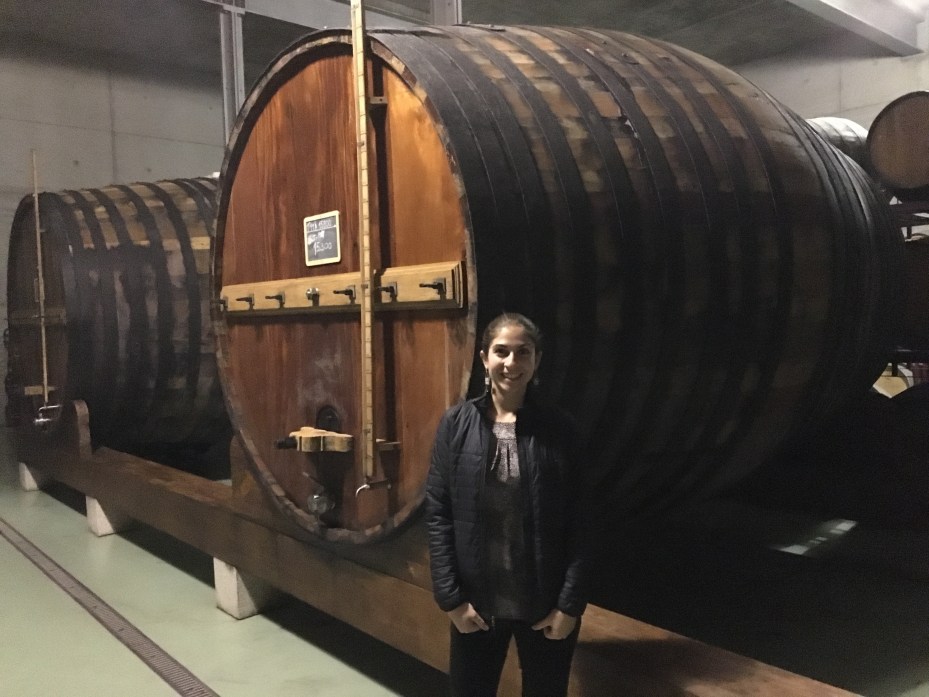
These giant wooden barrels are used to age the wine.
PS There was a family from San Francisco on our Port tour!
After leaving Casa das Pipas the next day, we got lost (again), but this time in the daylight so it was easier to find our way again. And in the meantime we took a nice photo with our rental car.

We *creatively* named our car “Jet,” since the 3 letters on the license plate (almost) spell that.
We drove through the Douro valley from Pinhao to Peso de Régua on what has been voted the most beautiful stretch of road in the world!


Later we drove through Parque Nacional Montesinho at sunset:

We finally arrived at our destination: a tiny little town in the mountains of Spain at about 10pm and guess what? It was Thanksgiving!
We’d called ahead of time to let the manager, Begonia, know what time we would arrive and to check if there was somewhere to eat “in town.” She explained the town was so small nothing would be open, but there was a “restaurant” at the hotel (in other words, a kitchen) and she was happy to cook for us if we arrived before 11pm.
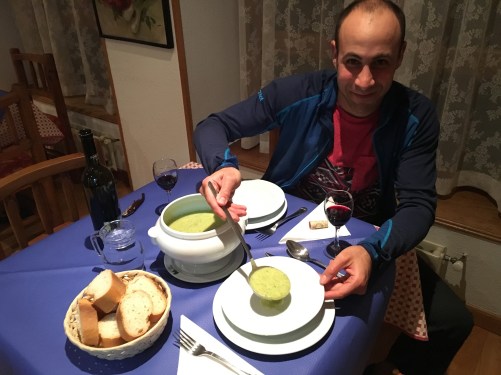
Creamy zucchini soup (enough for about 6 people)
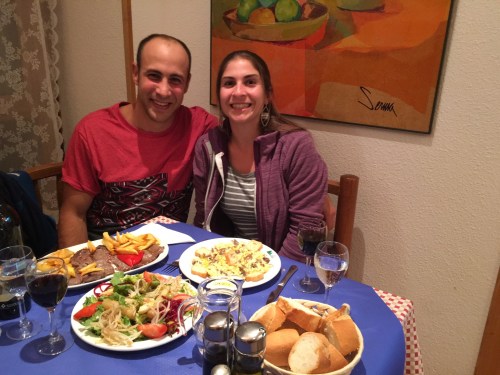
A somewhat non-traditional Thanksgiving meal: Salad, mushroom & eggs, steak & fries.
Begonia had never heard of Thanksgiving before, but now she’s catered a private Thanksgiving feast. I was very grateful for this late-night food in the middle of the mountains and also to be able to communicate in Spanish again.
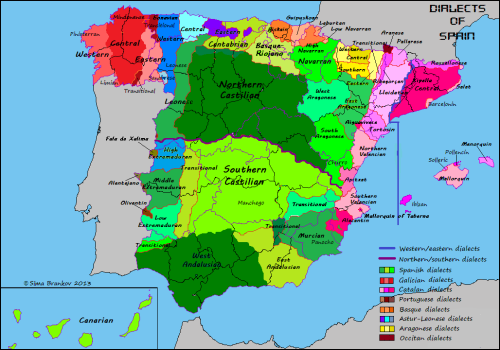
We had an interesting chat with Begonia about language (I was telling her what a relief it was to be back in a Spanish-speaking country after struggling with Portuguese). In a previous post I mentioned they speak Basque (or “Euskara”) in Pamplona. Begonia told me she understands several Spanish dialects or languages: “Gallego” or “Galician”—Galicia was the province where her father was from— and “Bable” or “Asturian,” spoken in Asturias and parts of Castille and León, where she grew up. I didn’t realize there were other dialects in Spain in addition to Basque and Catalan (which is spoken in Barcelona, Valencia and the Balearic Islands). In fact I found this map which shows there are about 10!
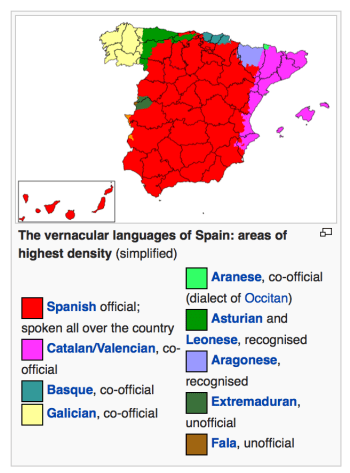
And even those languages have differences among them. So if you want to get really detailed, the color variations below represent the variation of the language (think the difference between English in Canada and the way we speak English in the US)
The next day we went for a beautiful hike to a lake in Parque Somiedo.


At one point we took a wrong turn and so had to bushwack our way down through all this shrubbery and snow!


On the way to Ribadasella (in the province of Asturias), a place which was one of several circles a helpful lady in the Tourist Information office drew on our map, we stopped in some fishing villages Manuel had recommended to us. But since I’m vegetarian, we resisted the fish and took some photos instead:

Cudillero
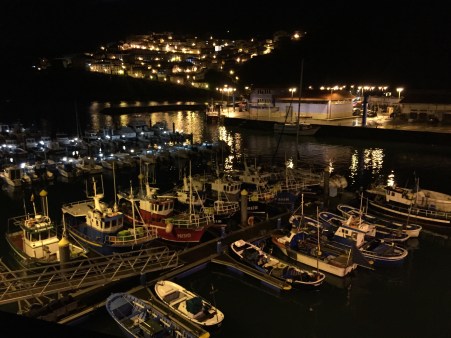
Colunga
In Ribadasella we went to a “Sidreria,” which is a bar that specializes in a sparkling cider that they pour from very high up.
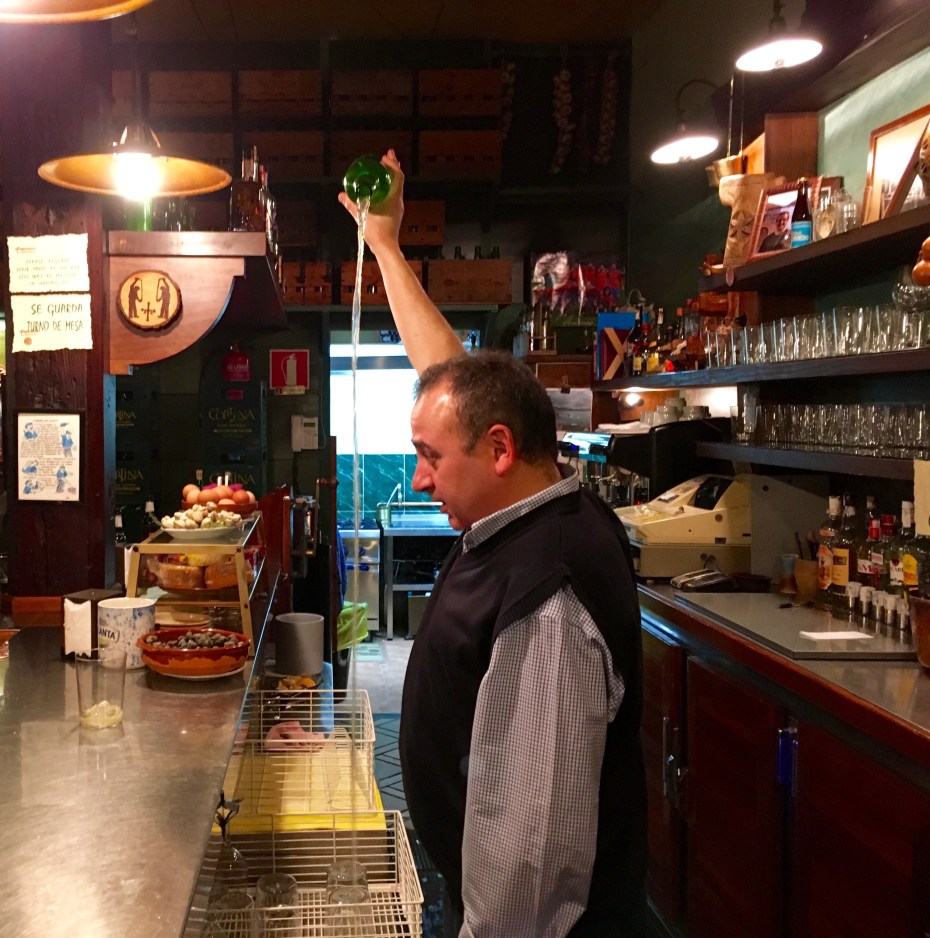
Drinking “Cidra” is tradition in the province of Asturias. The bartenders are expert pourers.
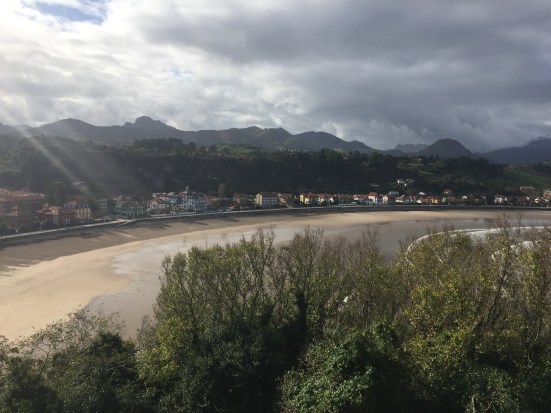
The beach at Ribadasella. Too cold to swim!
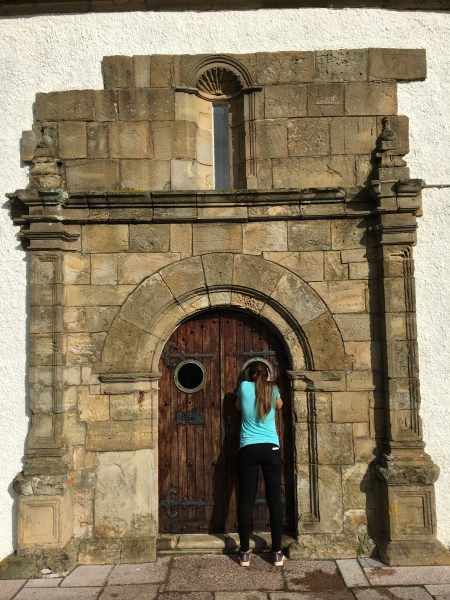
Taking a peak into the monastery on top of the hill in Ribadasella
I was excited to revisit the town of Llanes because I had vacationed there when I was studying abroad in Sevilla, Spain 10 years before!


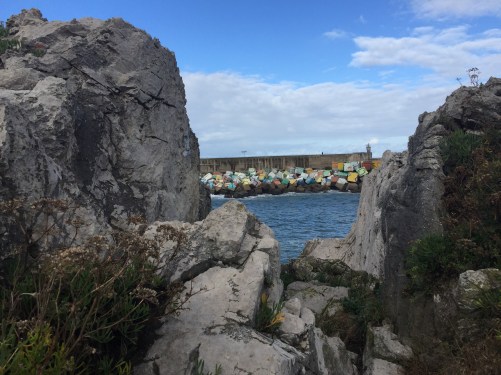
The Basque artist Augustín Ibarrola recently painted these cubes that have served as a breakwater (to protect from storms) in the Llanes harbor since the 1930’s.
More scenes from scenic Llanes-


Here David’s practicing his Fantasia moves at our next stop, San Vicente de la Barquera:
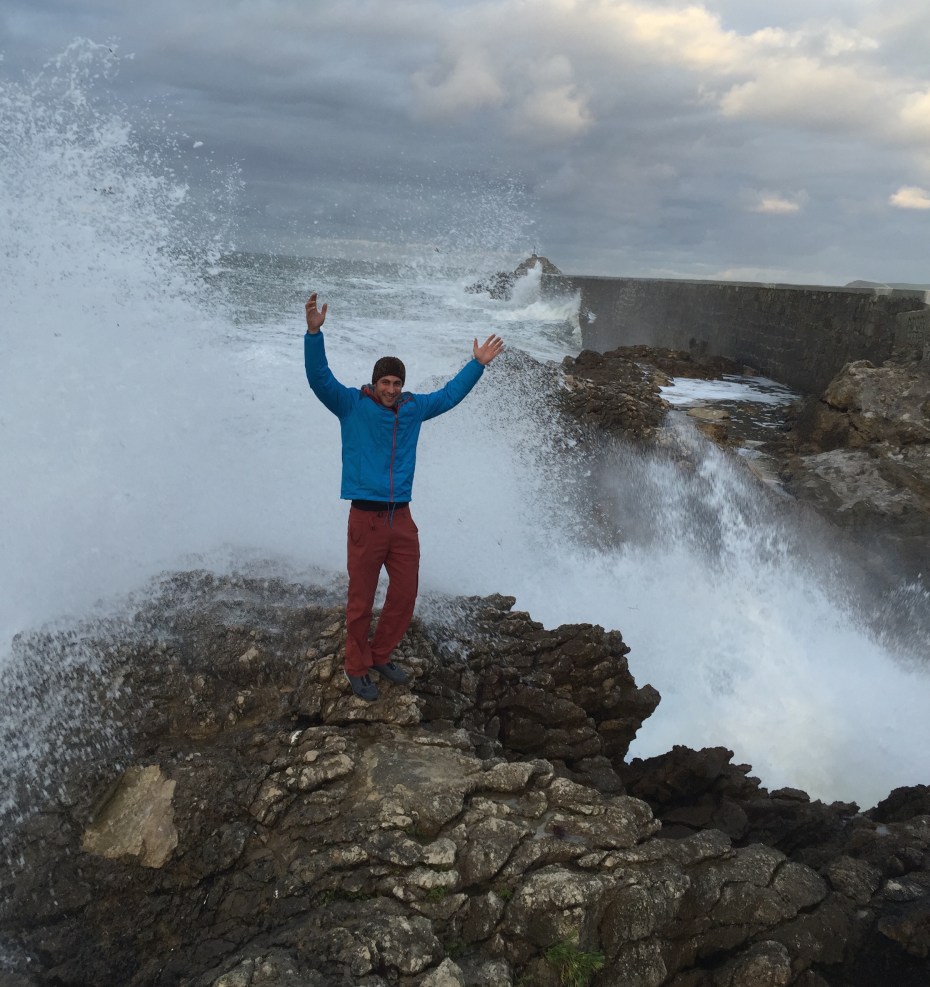

(Sidenote: If you’ve never seen Disney’s animated film Fantasia, here’s a clip of “The Sorcerer’s Apprentice.”)
Due to many stops along the way, we realized we weren’t going to make it to our intended destination before midnight, so we changed our plans to stay with Mónica in Pamplona, who runs the AirBnb I stayed at before and after visiting Arterra.
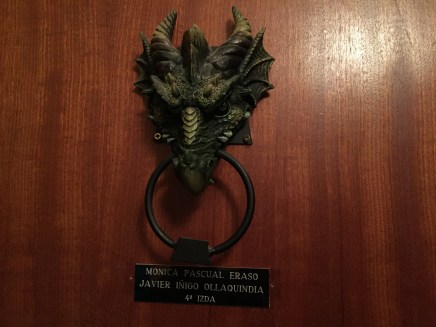
Monica’s door knocker. She also had a massive comic book collection and a bunch of medieval-looking weapons on display in her living room

Pamplona is famous for the “Running of the Bulls,” which takes place during the week-long festival of San Fermines every July. Hundreds of people run through the narrow streets of Pamplona, while being chased by… you guessed it, bulls! Take my mom’s sound advice, which she dispenses anytime I go near the country of Spain: “Don’t do anything stupid like running with the bulls in Pamplona!” Mom, you will be happy to know the above is just a statue!

A selection of tapas or “pinxtos,” which are especially popular in Basque Country. They are sometimes referred to as “small plates” in English menus because you order each item separately. If you eat 3 to 8 pinxtos (depending how big they are and how hungry you are!), it constitutes a delicious Spanish dinner.
I also got to take David to Pamplona’s anarchist bookstore, Katakrak, which my friends at Arterra had told me about. Anarchist bookstores contain “revolutionary” or harder-to-find titles, many of which support ideas that differ from those in popular culture. You know I love to read, and this bookstore was full of books I’d never heard of before!


The next day, I wanted to explore another place my friends from Arterra had told me about: Bardenas Reales. They said that lots of Spanish TV commercials, music videos and even TV shows and movies had been filmed there because it looked so different from the rest of the Spanish landscape:


I didn’t tell David where we were going, so he was quite surprised to find himself in a desert that was reminiscent of Arizona or Utah in the Southwest of the US.
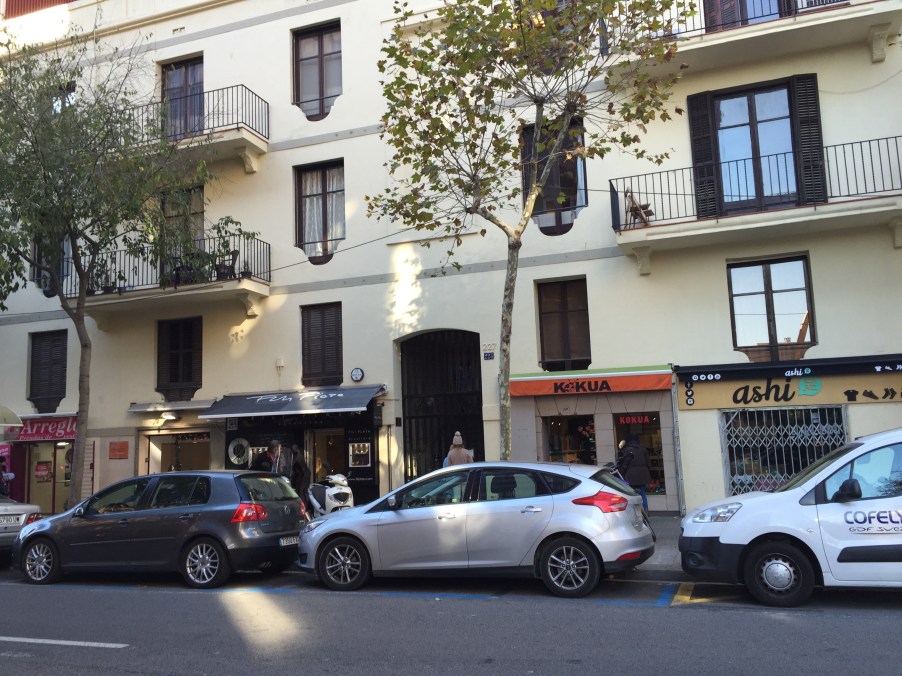
Our last stop on our road trip, and where we would return “The Jet,” was Barcelona. A cool thing about parking in Barcelona (unlike San Francisco) is that you can pay the early morning hours of your parking meter the night before! If you tell this to an adult in San Francisco, I think they will be jealous. When we returned the Jet it had 2514 kilometers on it. Can anyone figure out how many miles that is?
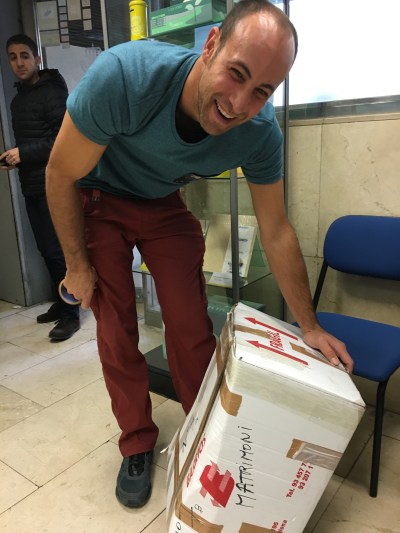
One of the first orders of business in Barcelona was to mail all of David’s climbing stuff that we’d been carting around in the trunk of the Jet back to the US:
My friend Jon wasn’t in Barcelona this time around (read about my first stop in Barcelona- and of my entire trip- here!), but I was excited that my new friend Sophie from Arterra was there to hang out with! She’s living in a neighborhood of Barcelona called Grácia.
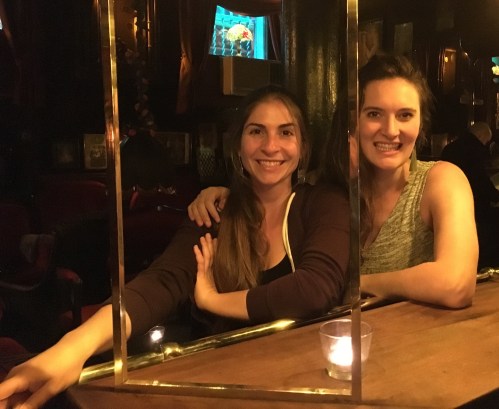

Sophie’s boyfriend works at this swanky bar called, “Les Gens Que J’Aime”- that’s actually French not Spanish… (Can you spot us?)
That’s it for Spain (for now!). Tune it to see where I’ll go next 🙂
 handshakehighfivehug